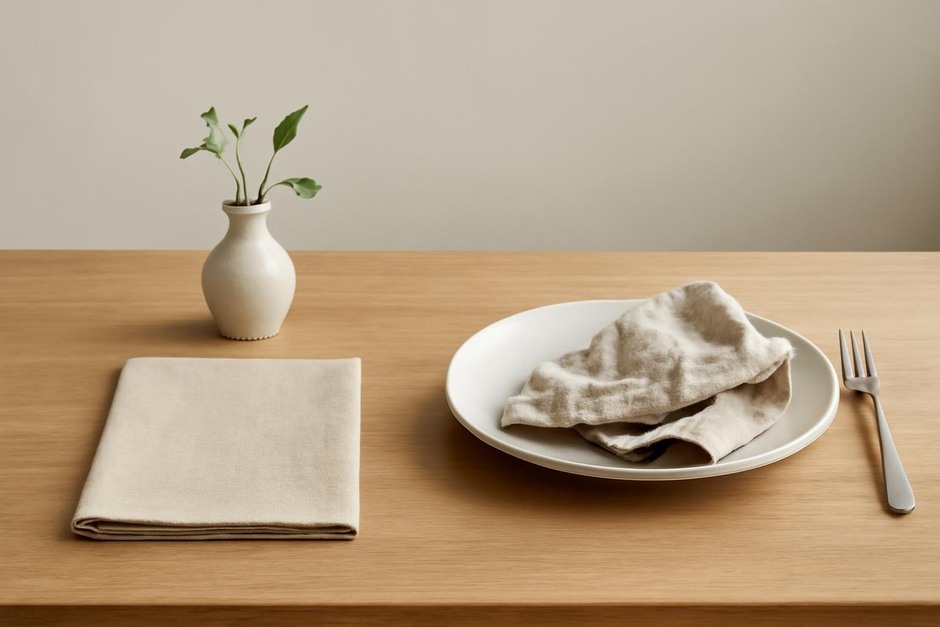
Three Quiet Experiments to Train Your Eye for Tabletop Color Harmony
A short studio-notes practice: three small experiments that teach you to see and arrange calming color relationships at the table.
Question
How do you learn to see quiet color harmonies so they become an automatic part of how you set a table, arrange a still life, or notice a room? These are three small, repeatable experiments — studio notes rather than final projects — that help you train that eye. Each builds on the last, adding a deliberate limitation or variation to refine judgment and taste.
Experiment 1: One Dominant Hue (A 10–15 minute constraint)
Purpose: Learn to recognize a dominant color and how supporting tones change its character.
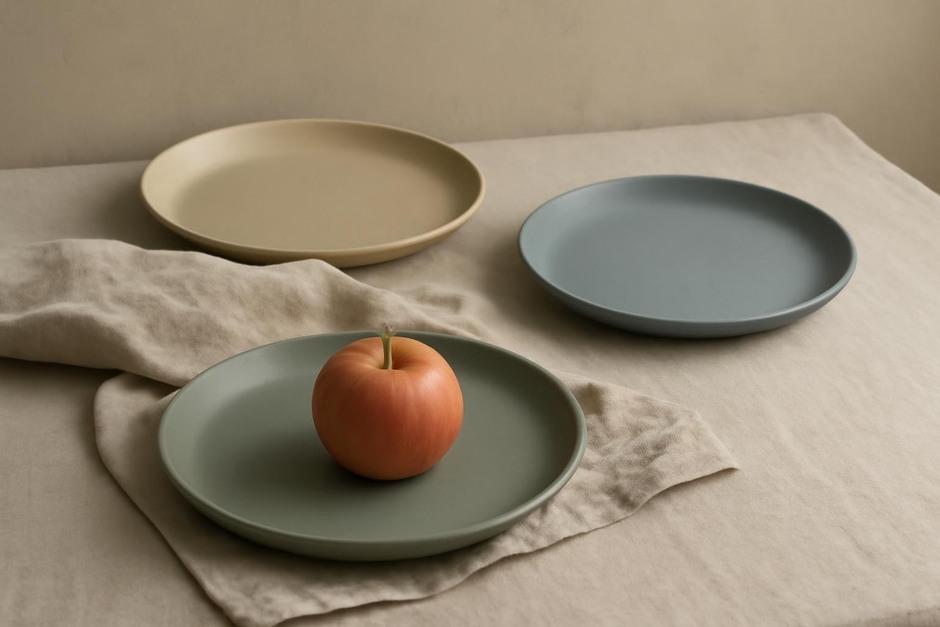
- Gather. Choose one dominant item on your table — a plate, a cloth, a bowl — in a single color. Limit yourself to three supporting items (e.g., a cup, napkin, small vase).
- Arrange. Place the dominant item centrally, then try three quick arrangements where the supporting items change positions. Spend roughly 3–5 minutes per arrangement.
- Observe. Notice which supporting items strengthen the dominant hue and which muddle it. Look for reflections, shadows, and the way light alters saturation.
- Record. Make a short note: which combination felt calm, which felt tense, and why (size, proximity, surface texture).
Tip: Keep lighting constant. Use natural daylight from a single window if possible. The constraint of one dominant hue sharpens your sense of what counts as harmony versus distraction.
Experiment 2: Accent Pairing (20–30 minutes)
Purpose: Practice adding a single accent color and learn how its placement changes the mood.
- Start with Experiment 1. Use one of the arrangements you made that felt most settled.
- Choose an accent. Pick a single contrasting or complementary color — a lemon, a sprig, a folded napkin — and introduce only that one new hue.
- Make four small variations. For each variation, move the accent to a different relational position (near the dominant object, at the edge of the frame, partially hidden, or fully exposed). Photograph or sketch each variation.
- Compare and note. Which position felt like a quiet punctuation and which pulled the eye too insistently? How did scale and texture affect the perceived intensity of the accent?
Tip: Try both a warm and a cool accent in separate runs. The same accent can feel lively or mournful depending on its neighbors.
Experiment 3: Limited Palette Drafting (40–60 minutes)
Purpose: Combine lessons from the first two experiments into a composed vignette you can live with and return to.
- Limit your palette. Choose three colors total: one dominant, one supporting, one accent. Gather objects only in those tones, and allow neutrals (wood, linen, paper) sparingly.
- Draft three compositions. For each composition, vary scale and material: one composition dominated by ceramic forms, one by textiles, one by botanical elements.
- Sit with each piece. Leave a composition unchanged for 10–15 minutes while you make notes: what invites the eye, what recedes, and what would you remove or simplify?
- Refine. Make one final adjusted composition based on your notes. Consider balance, negative space, and the quiet rhythm of repeated shapes or colors.
Tip: Light and surface treatment matter more than you think. A glossy bowl and a matte linen in the same hue will read differently; note how finish affects harmony.
Review: What These Experiments Teach
These three experiments form a gentle apprenticeship. You begin by isolating a single hue, then learn how one accent can alter the whole, and finally practice composing within a strict palette. The constraints force choices, and the short cycles make it easy to try many variations without pressure.
Observational habits to carry forward:
- Notice relationships more than objects — how one color moves the eye toward or away from another.
- Prefer subtraction over addition when unsure; removing often clarifies the harmony.
- Keep a small visual journal of sketches or photographs with a single line of note about why a composition worked or failed.
Next Steps
Repeat these experiments weekly, changing only one variable each time (light, material, or the accent color). Over weeks, you will begin to see combinations without arranging them: noticing a napkin against a saucer in passing, or the way a fruit shifts a table’s mood. That quiet recognition is the skill these simple, studio-style experiments are designed to build.
End with a small ritual: choose one composition you made during these exercises to leave on your table for the day. Live with it, and let it teach you about patience, choice, and restraint.