Three-Panel Studies: A Studio-Notes Practice for Slow Visual Stories
A compact studio-notes method for making small sequences of images—triptychs that encourage slow seeing, quiet rhythm, and gentle narrative in the home.
Problem
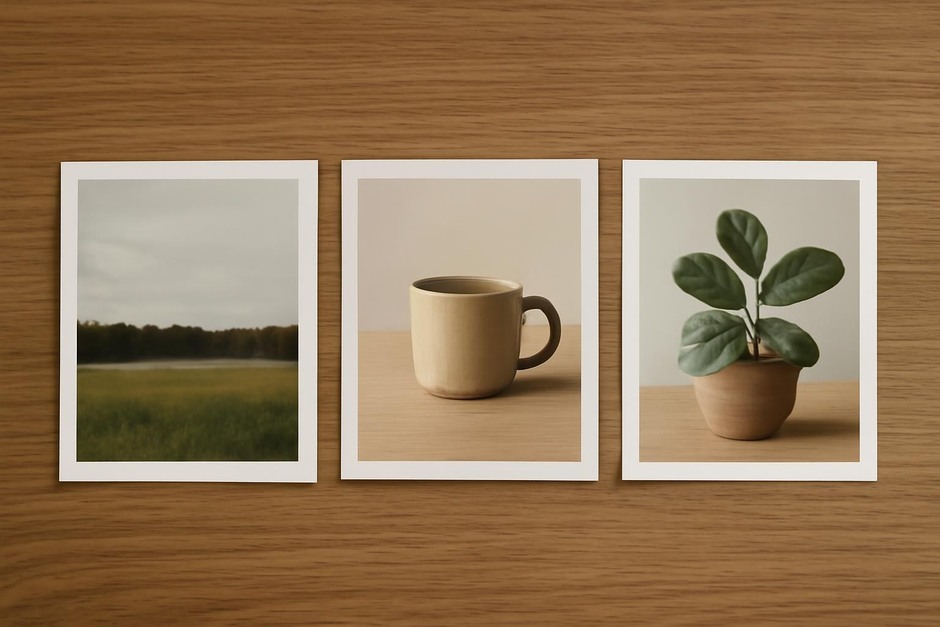
Single images often ask us to decide immediately what a scene is: portrait, table, landscape. That decision can flatten the quiet shifts that happen across a few moments—the way light tilts an edge, how a hand reaches for a cup, the way color changes as a breeze moves a curtain. The problem I set out to solve in these studio notes is simple: how to practice noticing small transitions without turning them into illustration. The answer I’ve returned to is a modest one—make three related images and let the gaps between them do the thinking.
Principles
- Question first. Begin with a single, narrow question you want the sequence to answer: How does this cup occupy a corner through first light? What changes when a page turns? The question keeps the study contained.
- Limit the variables. Choose one or two changing elements—light, gesture, placement—so the sequence highlights a shift rather than a catalogue.
- Keep a consistent frame. Use the same crop or viewpoint for all three images when possible. Consistency focuses attention on differences.
- Think in rhythm, not narrative. Aim for a visual beat across frames: establish, alter, resolve. The story should be implied, not spelled out.
- Honor negative space. Silence between objects is as telling as presence. Let emptiness be one of the sequence’s voices.
- Small edits matter. A slight step to the left or a half-turn of an object can create meaningful tension. Edit deliberately.
Examples
1. Morning Cup (Question • Process • Review)
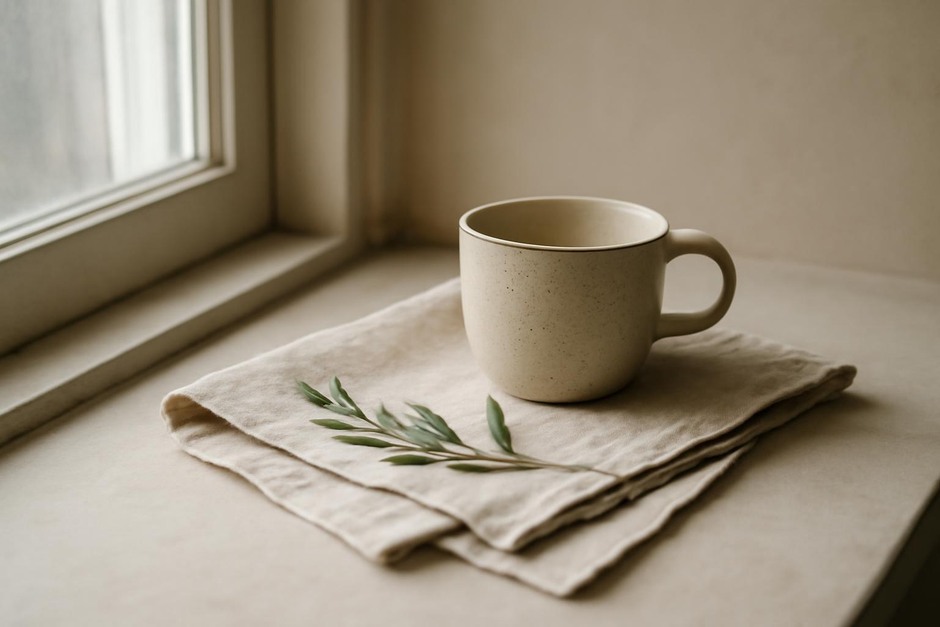
Question: How does the mug keep its quiet place as morning light arrives?
Process: Set the mug where your morning light falls. Make frame one before sunrise or in low light: soft shapes, deep tone. For frame two, photograph as the light begins to graze the handle—hold composition steady, let the light shift. For frame three, shoot when the light is full on the cup’s rim. Keep exposure adjustments minimal; allow contrast to show the change.
Review: The triptych reads as a small choreography of light. The consistent frame makes the light’s movement the subject. In editing, favour modest contrast and similar color balance so the sequence feels like a single study.
2. Windowsill Plant (Question • Process • Review)
Question: What does the plant reveal when a hand enters the scene to tend it?
Process: Frame the plant and surrounding sill. First image: the plant alone, composed with breathing room. Second: the hand arriving—capture a partial gesture, fingertips, or the sleeve—don’t show the whole person. Third: the plant after the touch or repositioning. Keep focal length and distance unchanged to emphasise the interaction.
Review: The hand’s absence/presence introduces scale and care. The sequence is quieter if the gesture is incomplete; suggestion invites the viewer to complete the story. Crop consistently and remove any competing details.
3. Table Edge (Question • Process • Review)
Question: How can three small changes suggest a single moment—preparation, pause, leaving?
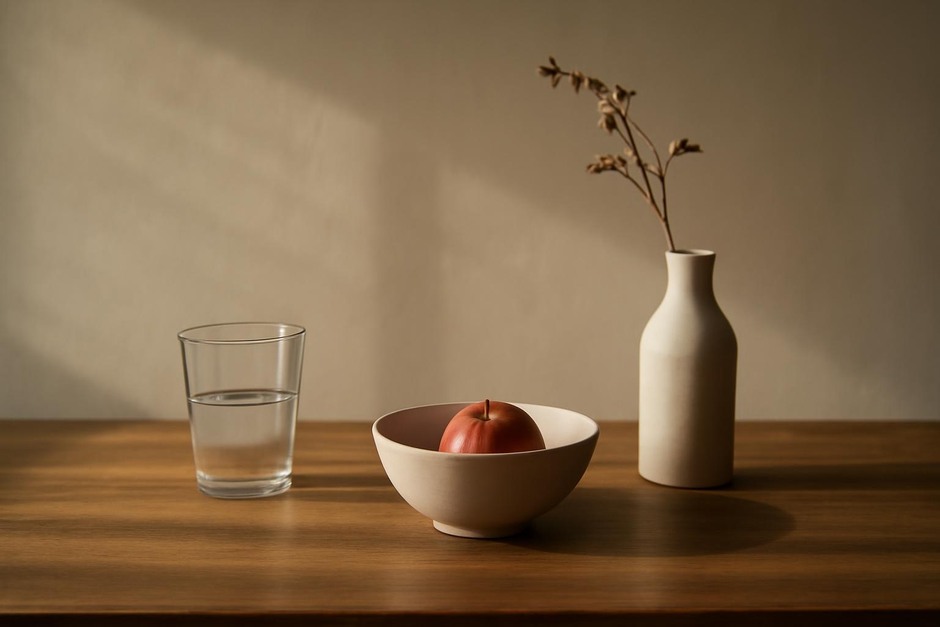
Process: On a small table choose three elements: a plate, a napkin, a spoon. First frame: all three arranged calmly. Second: move the spoon or fold the napkin slightly. Third: create a small absence—spoon partly off the plate or a crumb visible. Work quickly to keep the light constant, or embrace a slow light shift as part of the study.
Review: The sequence gains meaning from the minor edits. It reads less like a how-to and more like an invitation to slow attention. When assembled, the panels should breathe; avoid over-processing individual frames so the triptych stays cohesive.
Practice Checklist
- Choose a simple, specific question to guide the sequence.
- Limit to one or two changing elements (light, gesture, placement).
- Use the same viewpoint and crop for all three frames when possible.
- Shoot in quick succession or accept the light’s slow change; be deliberate about which you choose.
- Edit lightly and consistently—prioritise cohesion over polish.
- Print or arrange the three images side by side and sit with them for a day before revising.
Making three-panel studies is a small practice with large returns: it trains the eye to observe process rather than object, and it teaches restraint. Start with things that return to you—the corner of a table, a favourite cup, a single plant—and let the gaps between images become the quiet subject.